Quick setup: what this preview covers
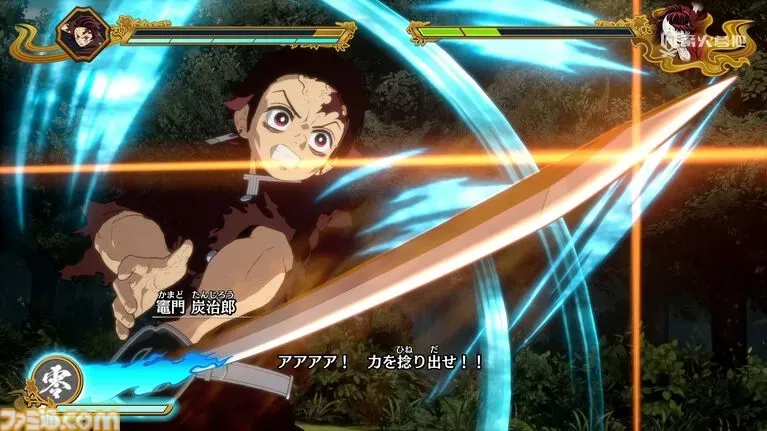
In the single-player mode “The Hinokami Chronicles,” you can relive Tanjiro’s journey like the first game, and this time it includes the Entertainment District Arc, Swordsmith Village Arc, and Hashira Training Arc. I got hands-on time with the opening of Swordsmith Village, plus a look at combat for Mist Hashira Muichiro Tokito and Love Hashira Mitsuri Kanroji on PS5.
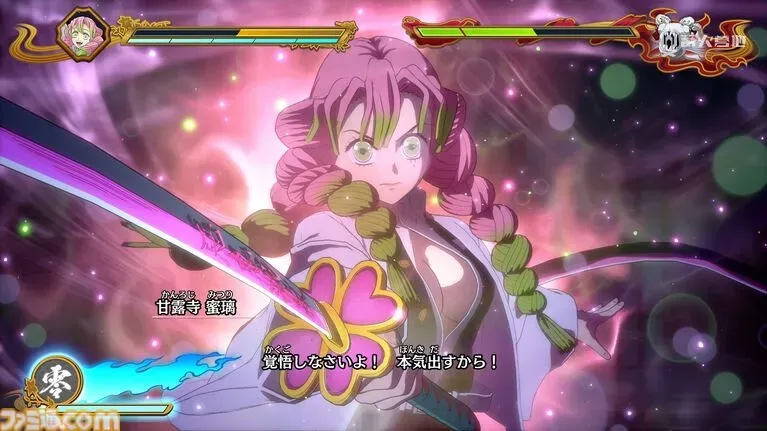
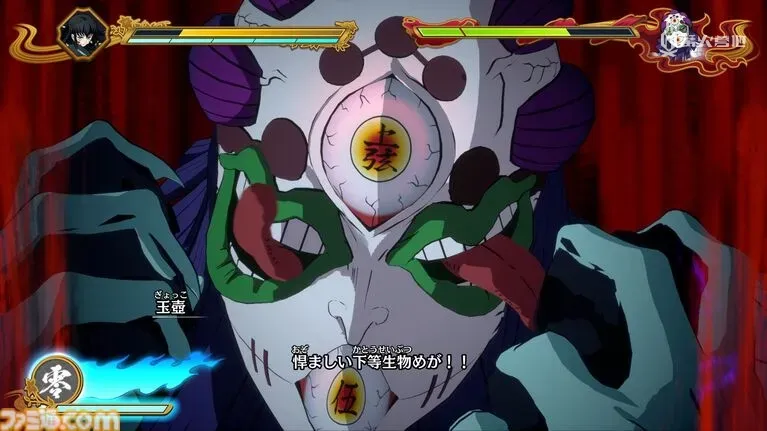
The game already had a lot of its own charm, but being able to play as the Hashira is a big deal. Somehow, after the demo, I even started to like Gyokko. That is… new.
This is based on an in-development build, so visuals may change in the final release.
Strolling the village: immersion starts here
Swordsmith Village is the second major section after the Entertainment District. After the brawl with the Upper Rank demon, Tanjiro loses his Nichirin blade and goes to the village to meet the swordsmith Hotaru Haganezuka face to face. That is where this chapter kicks off.
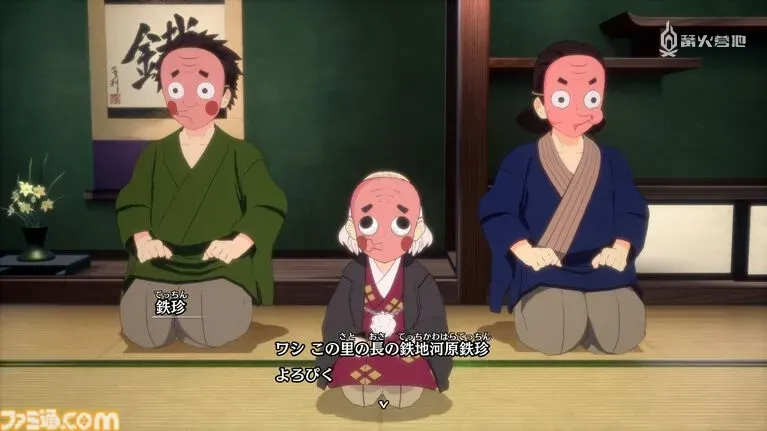
This part honestly made me excited. My favorite thing about the first game was the “you are in the story” feeling, and it still hits. Moving forward, searching, talking to NPCs, you are the one doing it, so the story feels more personal.
When I reviewed the first game, I even doubted the developers had a heart for the way they forced tough choices. Enmu, I still have not forgiven you.
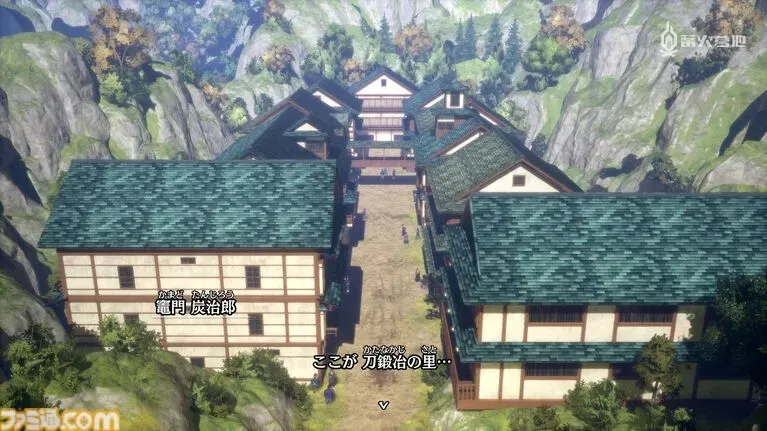
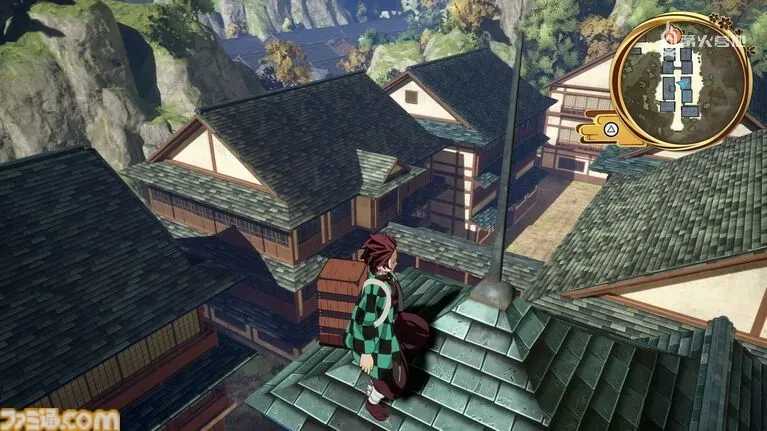
For example, there is a scene where young Kotetsu gets questioned by Muichiro. In the anime, Tanjiro hears it and rushes over in a cut. Here, you actually play the “run there” part. Even if you know the story by heart, the interaction feels fresh. Reuniting with the villagers, Kotetsu, and Haganezuka lands like seeing old friends again. The humor also lands nicely.
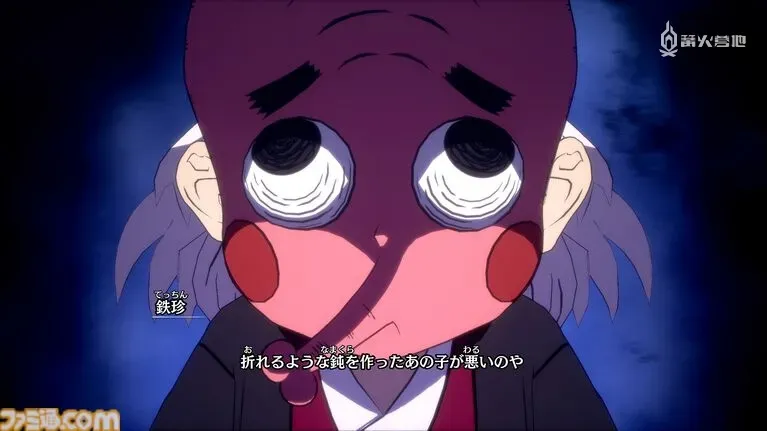
Then Tanjiro and Kotetsu repair the combat training puppet Yoriichi Type Zero, and the real combat begins.
Combat feel: free movement, tighter buttons
Combat is a 3D action system where you run around the arena, so enemy attack ranges are wide. You have to read tells, dodge, and use guard or parry to stay alive.
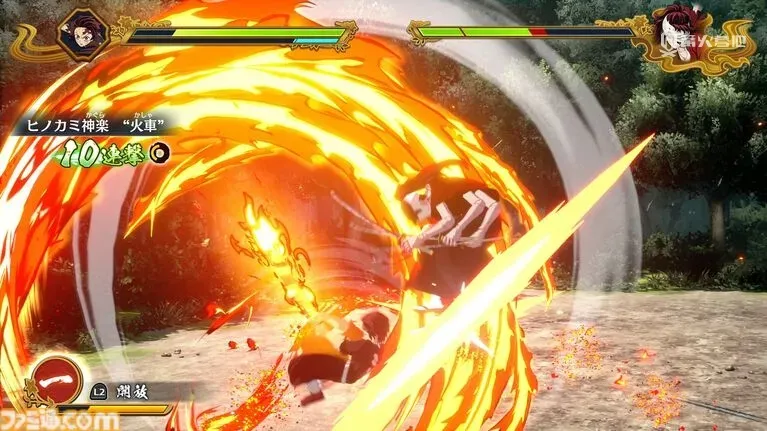
Skills trigger with button combos, no fighting-game inputs required. The core flow is: find an opening, press Circle to “pursuit dash,” close the gap, and unload skills.
One change I noticed: in the first game, quick stick flicks triggered parry and heavy attacks. Here, parry is R1 + X, heavy is R1 + Circle. For people who struggle with stick flicks, this probably feels better. Tapping R1 alone guards, which makes defense more forgiving if you are late.
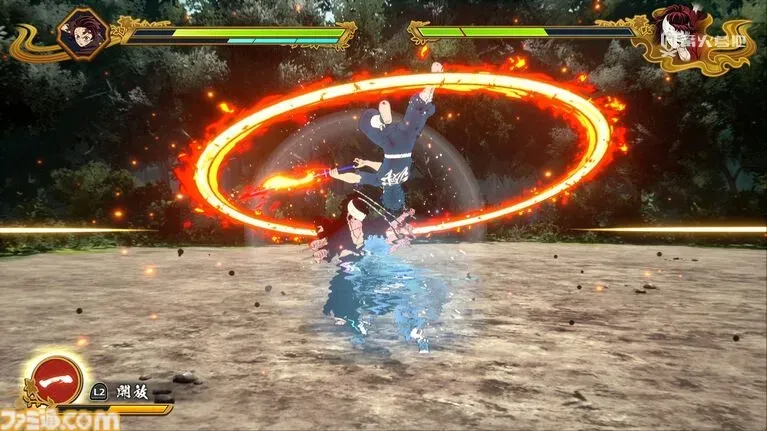
Demon Slayer has plenty of fans who do not usually play action games, so I can see why they simplified the inputs. It lets more people feel that flashy, high-intensity combat without fighting the controller.
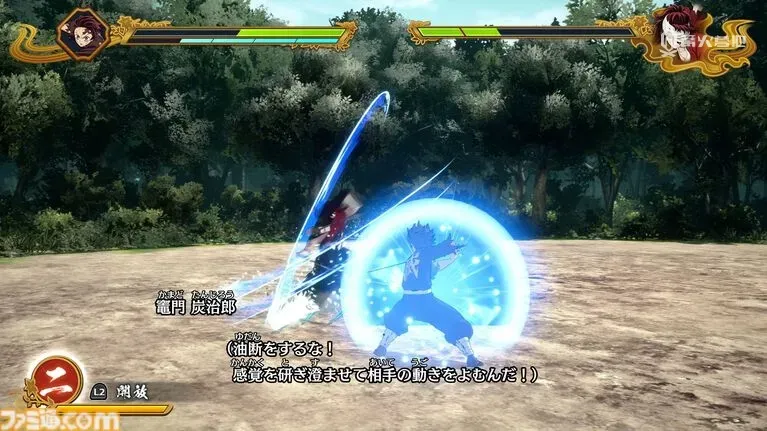
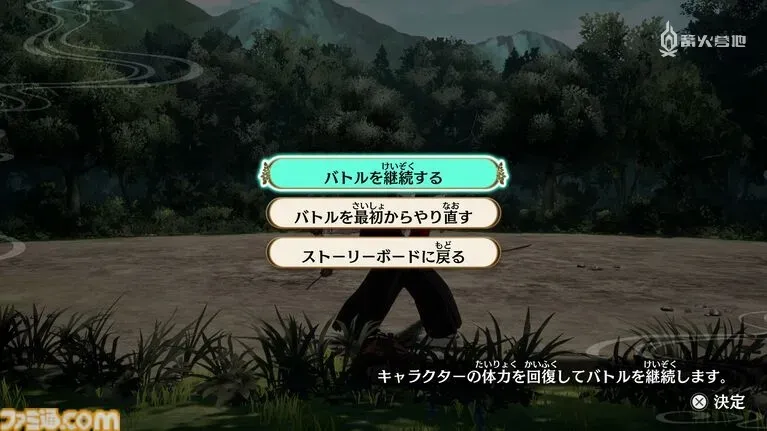
The Yoriichi Type Zero fight is no joke. It is early in chapter two, but it already hits hard. I lost once, but the retry system lets you continue with the enemy’s HP reduced, so I still cleared it.
Love Hashira time: pure power fantasy
Next up was Mitsuri Kanroji. She takes out Gyokko’s fish demons and saves the village chief, Tecchin. This time you control Mitsuri, not Tanjiro.
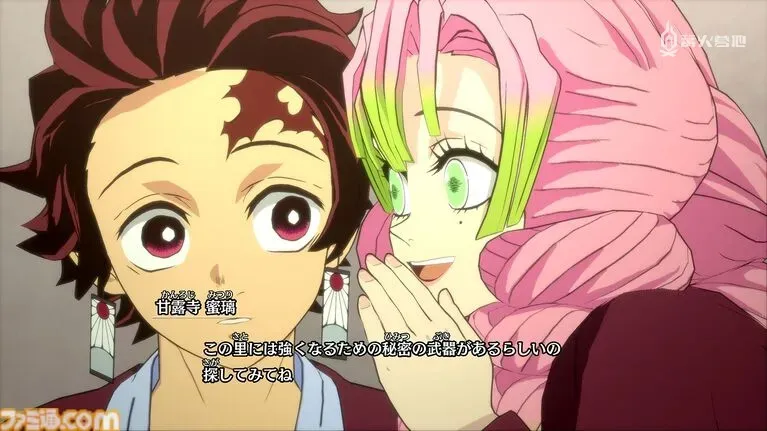
Here, tons of enemies swarm her. The first game mostly kept fights one-on-one or small groups, but this is full-on crowd control.
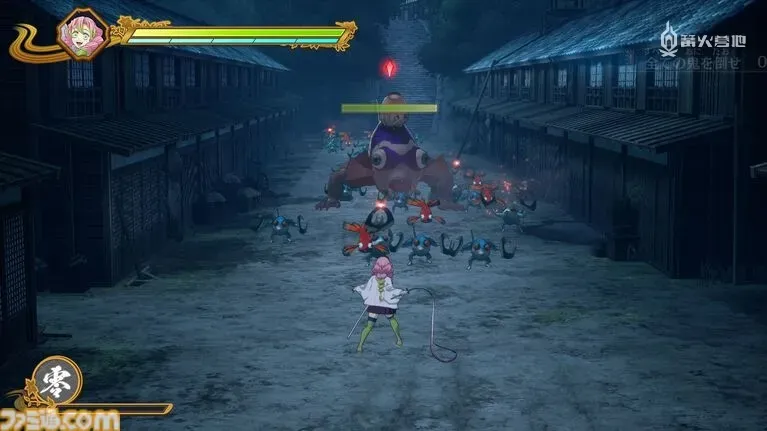
Mitsuri’s fighting style is her whole personality. Strong and flexible, her movements are almost rhythmic-gymnastics level graceful. To capture that, the game throws you into a big crowd fight. Her whip-like blade spins around in wide arcs, and just tapping attack makes her glide through enemies.
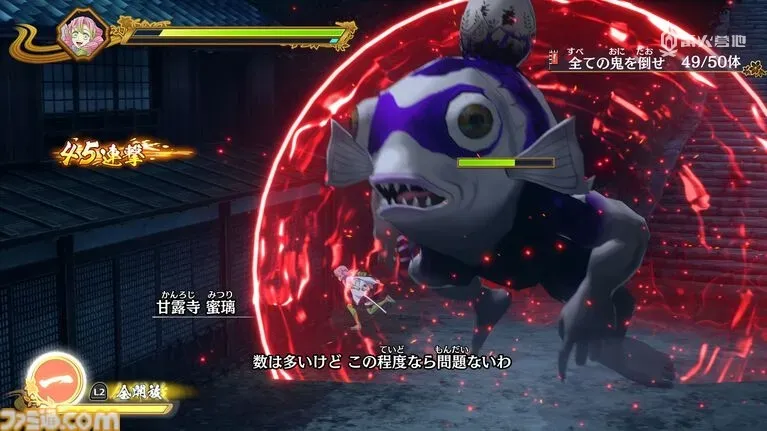
The fish demons are supposed to be scary, but Mitsuri erases them. Even when they keep coming, she melts the crowd in seconds. It feels amazing, like suddenly your character got way stronger.
That “I am stronger now” feeling matters. It is motivating, especially for players who do not enjoy tight, stressful 1v1 fights. After the Entertainment District battles and the Yoriichi Type Zero training, controlling Mitsuri feels like leveling up as a player.
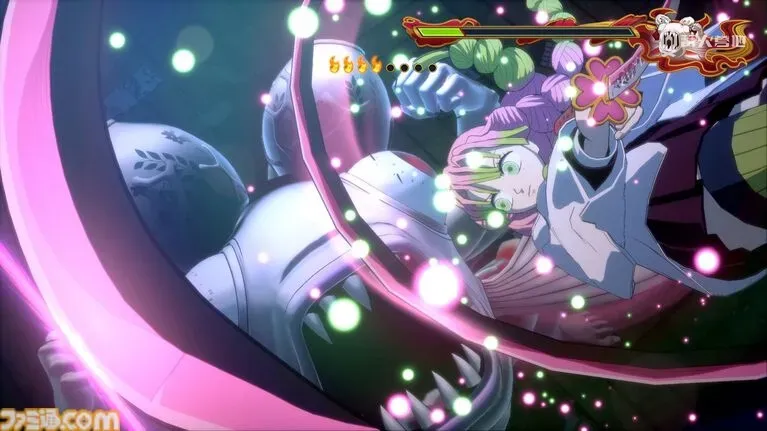
Most of her moves are mobile attacks, perfect for this “one vs many” setup. Once you get the rhythm, you can dodge while attacking nonstop without leaning on guard or parry.
That is what a Hashira should feel like. If I had more time, I would have replayed it just to chase that “perfect Hashira” run.
Mist Hashira vs Gyokko: the villain you love to hate
The next demo chunk is Muichiro Tokito vs Upper Rank Five, Gyokko. One is the “genius among Hashira,” the other is an elite demon under Muzan.
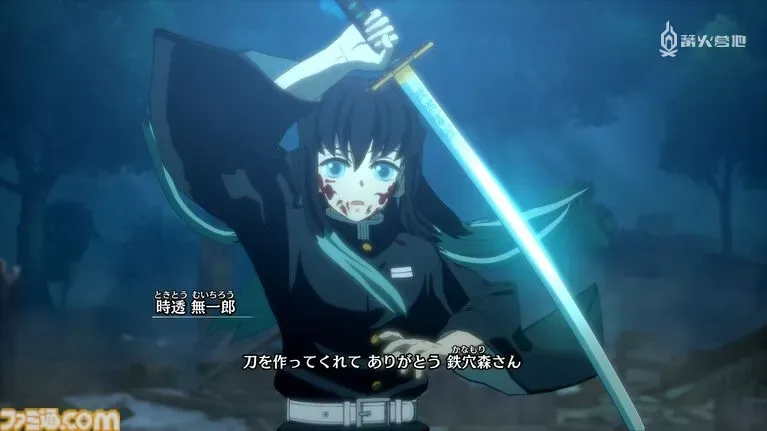
Muichiro regains his memories here and enters the Marked state. That power-up carries through the fight once you fill the gauge.
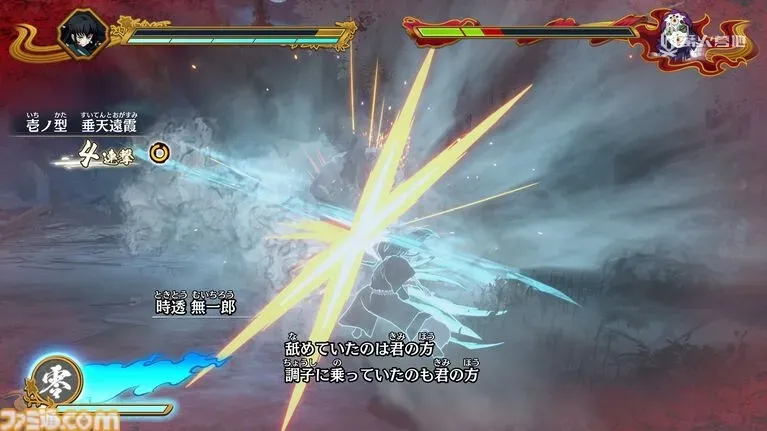
In practice, marked Muichiro is insanely strong. If you get into that state cleanly, you can avoid most of Gyokko’s attacks and control the fight.
That said, the player is still a mere mortal. I am not a prodigy, and I have not been through Hashira training.
Gyokko in this fight is both powerful and infuriating. His fish projectiles spray in wide patterns, and even if you block, the multi-hit pressure can still break you.
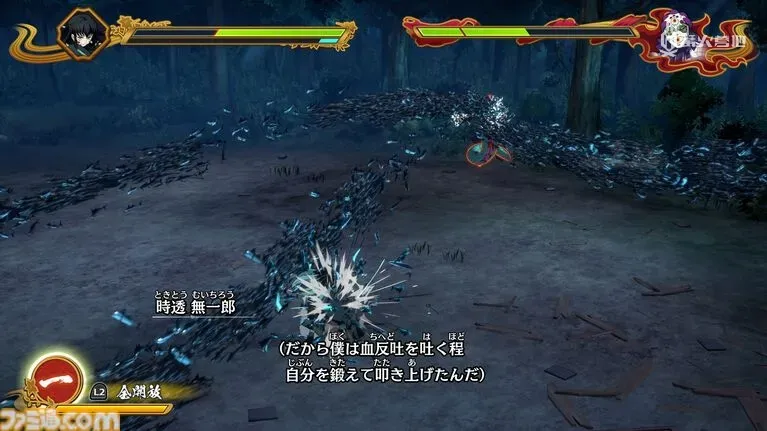
His tentacle strikes cover a huge area, are fast, and have super armor, so you cannot just block them away. He also spams big guard-breaking AOEs. Turtling does not work, but his own defense is annoyingly tough, so you cannot brute-force him either.
The more you fight him, the more you see openings, and you think, “I can perfect this.” Then he punishes you with projectiles or tentacles. Classic villain behavior.
Still, this is a perfect “love to hate” boss. His cocky personality, his banter with Muichiro, and even his reaction to Muichiro’s ultimate “Oboro” are all pitch-perfect. When he screams, “What is that!? What is happening!?” it is the exact villain line you want.
Beating him with Muichiro feels incredible. I do not remember the last time a villain felt this satisfying to put down.
Final takeaway
The first game made you grow alongside Tanjiro. This sequel goes further by letting you feel what it is like to fight as the Hashira themselves. After this demo, I want more of that.
It is not just a retelling. It actually makes me re-appreciate the characters, both the Hashira and the demons. Because of that, I would recommend it to people who already love Demon Slayer and to newcomers who just want a fun action game with a strong anime vibe.