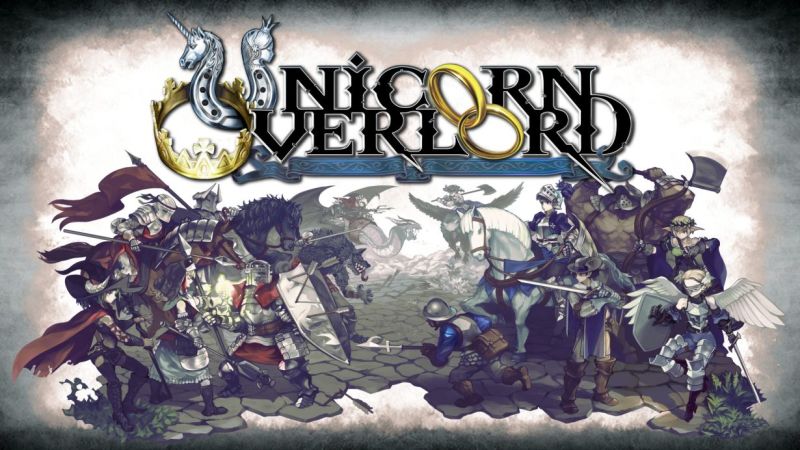
With the release date approaching, the Unicorn Overlord demo dropped last week. The play limit is only five hours, but I still managed to see a surprising amount of the game. If you are on the fence, consider this my personal nudge: Vanillaware has another intriguing SRPG on its hands.
A Classic Prince’s Return
The story is classic fantasy in the best way. Vanillaware builds a world called Fevrith, a continent split into five nations: the mountain and desert kingdom Drakenhold in the southeast, the forest elf nation Elheim in the southwest, the frigid beast realm Bastorias in the north, the winged theocracy Albion in the west, and the central Cornia ruled by the sacred queen Ilenia.
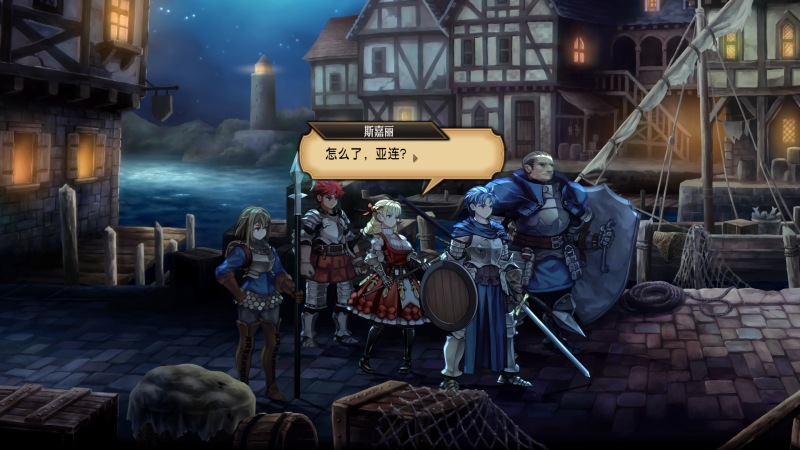
You play as Alain, prince of Cornia. When he is young, General Valmore crowns himself Emperor Galerius and launches a conquest across the continent. The queen entrusts Alain to the knight Josef, and the two flee to Albion beyond Galerius’s reach. As Galerius unifies the land under the new Zenoiran Empire, Alain grows into a capable lord and the rebellion begins to rise.
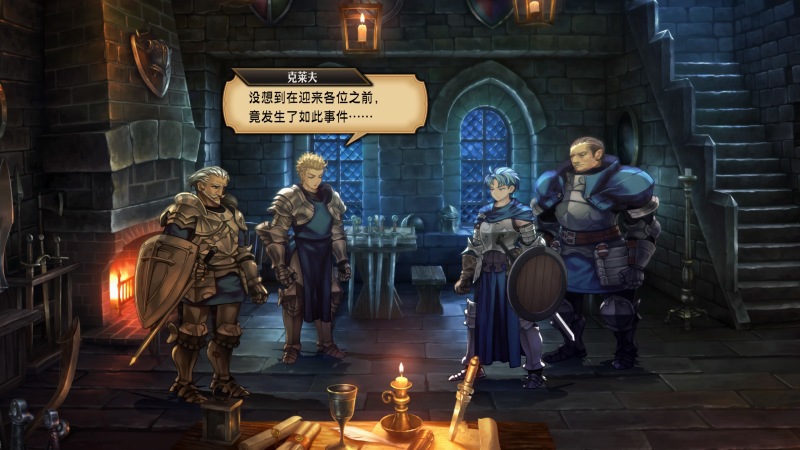
It is the familiar “prince retakes the kingdom” arc. You should not expect the twisty, layered structure of 13 Sentinels, but Vanillaware’s storytelling usually finds the right mix of hype and heart.
Vanillaware Characters, Through and Through
Beyond Alain, you will meet dozens of companions with distinct personalities. Their designs are unmistakably Vanillaware, and yes, the fan-service flair is here. As a strategy RPG, it also gives you a classic early safety net: the veteran knight Josef, who carries the early game when you are still learning the ropes.
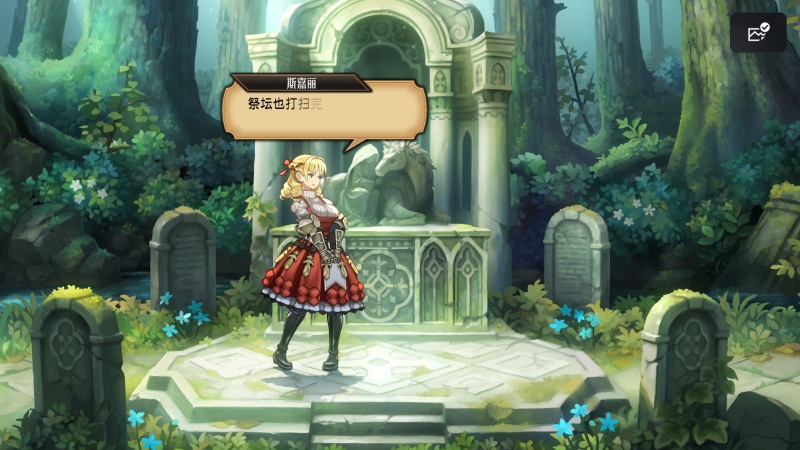
While liberating cities, you can recruit local resistance groups or remnants of the old regime by helping them break enemy lines. At times you can capture enemy commanders and choose to recruit or execute them.
Every character has a bond level you can raise by fighting together or giving gifts. High-bond members in the same squad earn formation bonuses, and some pairs unlock special bond conversations.
In fortified cities, the inn lets you share meals to boost bonds. Different dishes change how many people can dine and how much bond you gain. The food scenes are pure Vanillaware, and watching everyone dig in is part of the charm.
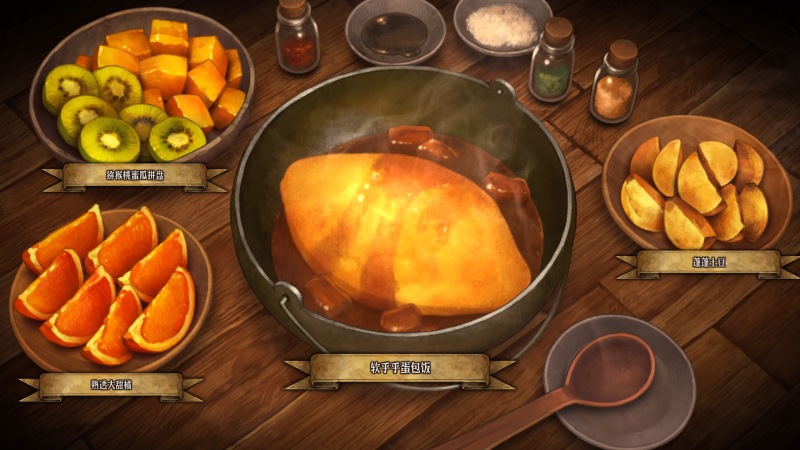
When Alain reaches max bond with a companion, he can present a matching ring to his Unicorn Ring and perform a pledge ceremony. You can only choose one.
Deep Classes and Growth Paths
As your army expands, more classes unlock. Alongside staples like archers, guards, and clerics, you will also get fantasy units such as elven fencers, werewolves, and gryphon knights. Class matchups matter, and you need to build around them.
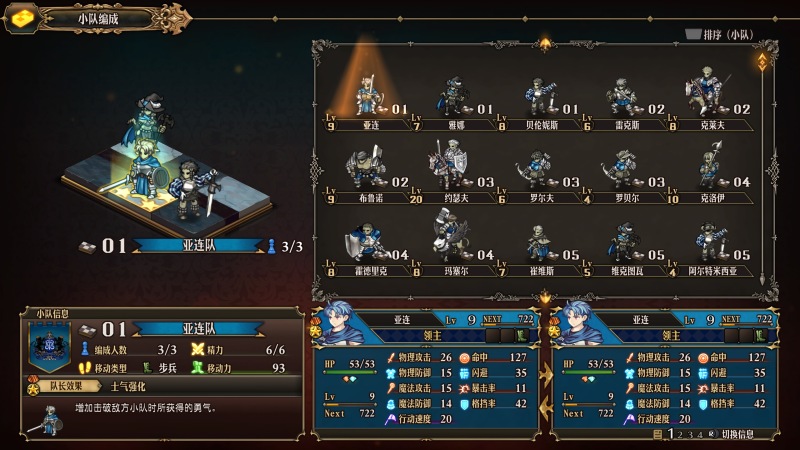
Spending “medals” promotes characters into advanced classes. Promotions raise stats and add new skills. For example, Alain’s Lord class can become Monarch, shifting from infantry to cavalry, gaining speed and area damage against foot units.
Squad building is where the strategy really sinks in. It is not just about counters; turn order matters. Frontliners soak damage while fragile damage dealers stay in back. Even if the enemy squad hard-counters your archers, positioning them behind defensive units can still swing the fight.
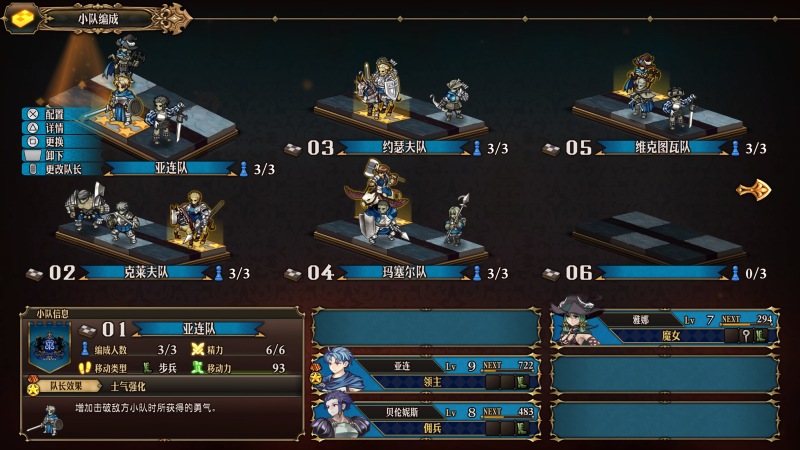
The squad leader slot also grants passive effects. Make a guard the leader to break obstacles faster, choose cavalry for faster movement, or pick a swordfighter to reduce damage when entering enemy ranged zones.
As your roster grows, the game provides a clear way to grind levels. The optional “Ancient Magic Circle” battles on the world map let you fight phantom soldiers for EXP. The guidebooks you earn can be consumed for instant EXP on any character. The more you invest across your roster, the richer your tactical options become.
A Continent-Wide Liberation Journey
Gameplay splits between exploration and battles. Starting from the central island, you can choose your own path across the continent with the goal of liberating all five nations.
Exploration triggers events and side quests, from treasure hunts to standalone challenge stages. Clearing them yields resources. If you see an unmarked building, it is worth checking; secrets are common.
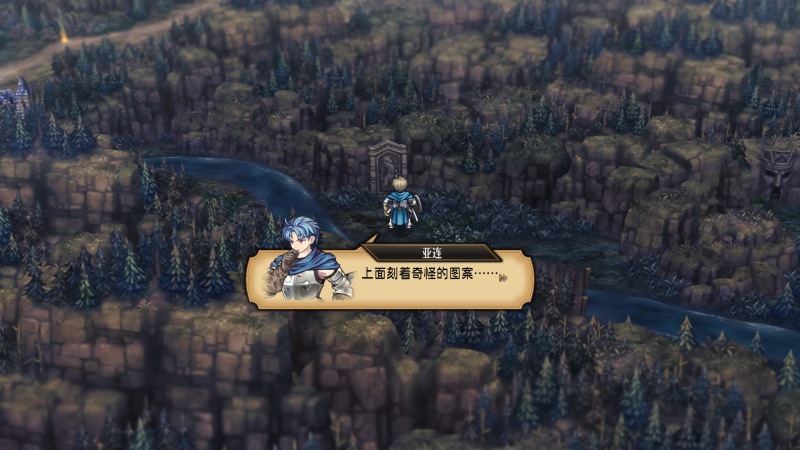
Winning battles liberates regions and flips towns to your side. Towns provide gear and item shops, and if you invest supplies to rebuild them, you unlock ports, inns, and more.
Rebuilding costs materials gathered from resource nodes on the map. Some nodes hide behind mountains, so explore the back roads. Once rebuilt, you can assign a companion as a town guard. Guards generate income after each stage and will auto-collect from known nodes.
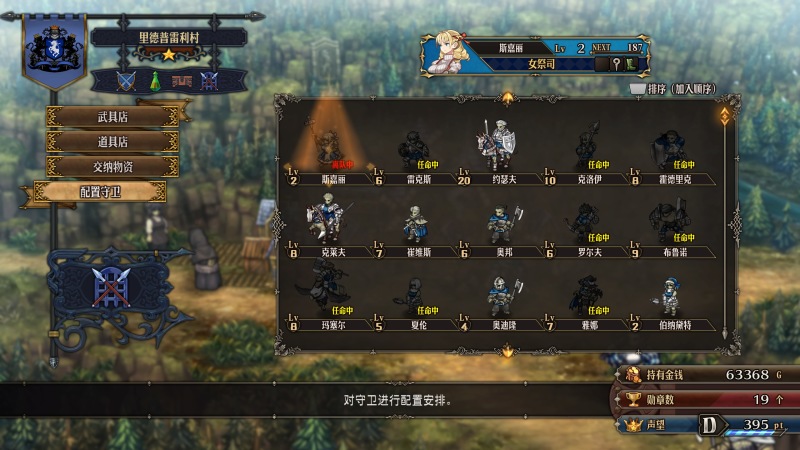
Forts near towns let you expand squad capacity and size. With enough growth, you can field ten squads of five. Expansions cost medals, and fort functions are gated by renown. Medals come from stages and donations, while renown rises through quests and town recovery.
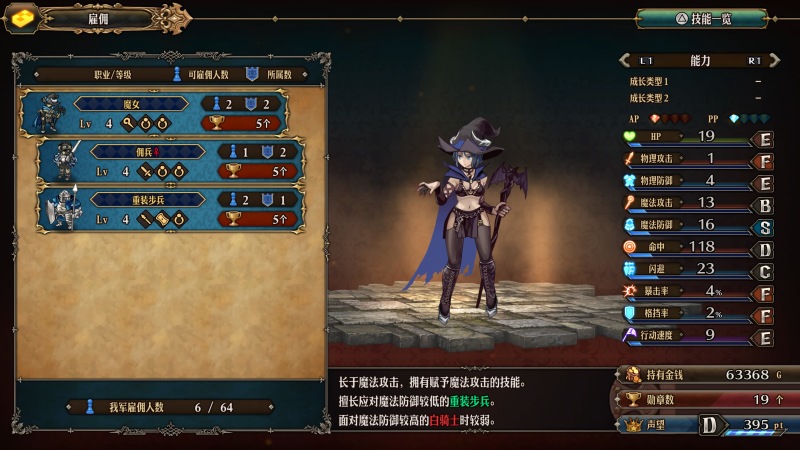
Higher renown also unlocks hiring mercenaries. They are generic faces, but you can customize their looks and growth paths. If you want a fully tailored army, mercs are a great way to fill gaps.
Where RTS Meets TBS
The battlefield format blends RTS and turn-based tactics. Both sides move in real time, and you must command squads to meet objectives within a time limit. Clear times, kills, and renown contribute to rewards.
Squads you recruited on the map can be deployed from blue-flag bases, spending the Valor resource shown in the top-left. Once deployed, you issue movement orders. Roads are fastest, but cutting through grass or forests can enable surprise attacks. If your leader can fly, you can ignore terrain and beeline key points.
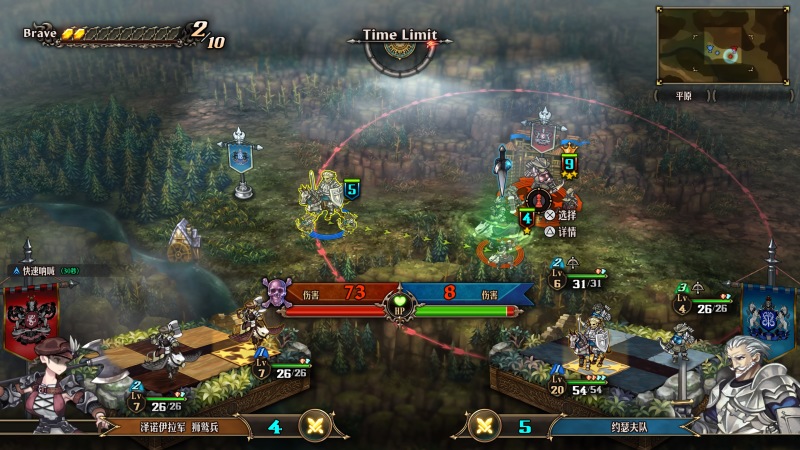
When squads collide, you choose to engage. If another friendly squad is nearby, you can swap in for battle on the fly, adjusting to matchups and current health.
Combat is automated based on unit speed and the tactics you set in advance. The side left with less HP loses and is knocked back into a “wait” state. Attacking a waiting enemy triggers a preemptive strike for a speed advantage.
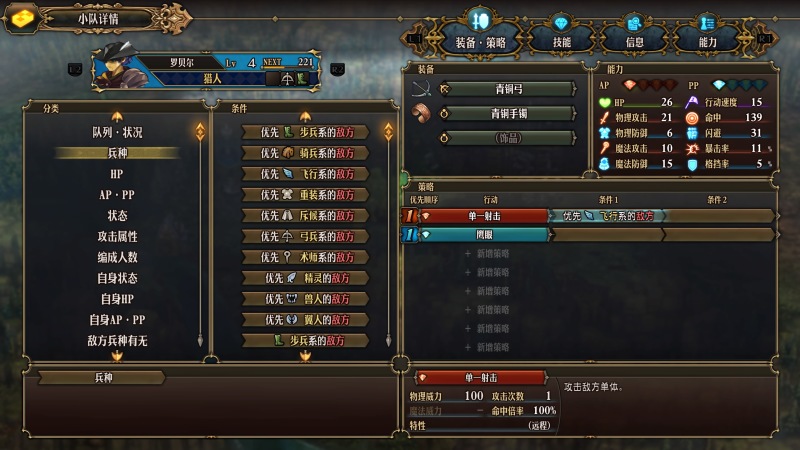
Tactics can be changed anytime. Since each battle has different enemy compositions, you need to adjust your rules. A self-heal can be set to trigger below 50 percent HP to avoid waste. Ranged units can be set to prioritize backline targets to cut enemy damage.
Every battle, win or lose, costs squad stamina. When stamina hits zero, the squad cannot move until you rest, but resting leaves them vulnerable. In messy fights, if a squad has only one stamina point left, pull it back to base before it gets caught.
Valor skills can flip the fight. Some are AoE attacks, others revive, heal, or restore stamina to keep your front line going. When you already have the edge, skills that steal money or boost post-battle EXP help maximize rewards.
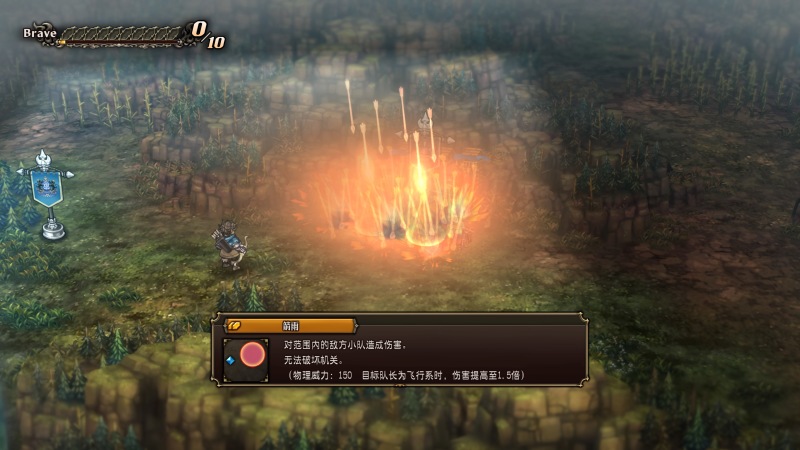
Beyond squad tactics and terrain, stages also include map gimmicks. Arrow towers provide wide ranged support, altars let you pray for weather advantages, and ground spikes stop ground units from approaching. Smart use of these tools can let one squad hold a choke point against a larger force.
Final Thoughts From the Demo
The five-hour limit sounds short, but the demo moves fast and packs in a lot. The strategy depth is clear.
You start by tweaking a single character, then it grows into full squad synergy, matchups against specific enemy types, and terrain and gadget plays. It keeps a TBS core but layers in RTS-style multi-angle decision making, which makes each battlefield feel distinct.
Exploration on the world map is equally satisfying, with Vanillaware’s art and storytelling pulling you into a classic fantasy adventure. Islands, hidden roads, and character bonds all add to the sense of a living journey.
Unicorn Overlord launches on March 8 for Switch, PS4 and PS5, and Xbox Series X|S. I will be there for the full review.