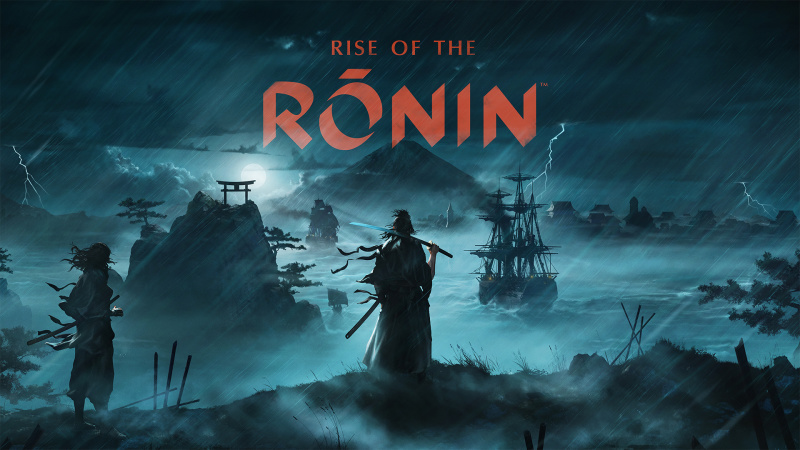
Team Ninja’s Rise of the Ronin launches March 22 and marks their first open-world project set in late Edo Japan. I played the first couple of hours ahead of release, and here are my early impressions focused on combat and the world.
Combat: A Familiar, Busy Blend
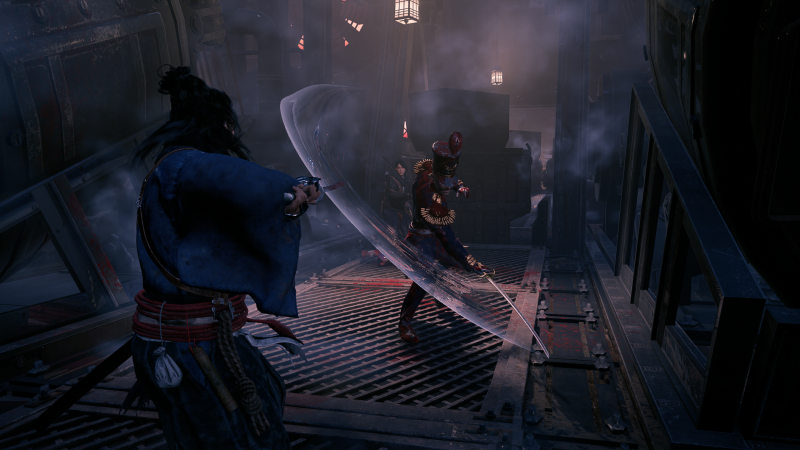
You can feel Team Ninja pulling from Nioh and Wo Long here. The stance system returns under a new name, “styles,” with each weapon offering three to six options. Each style has its own move set and a unique special technique, executed the same way as Wo Long’s skills.
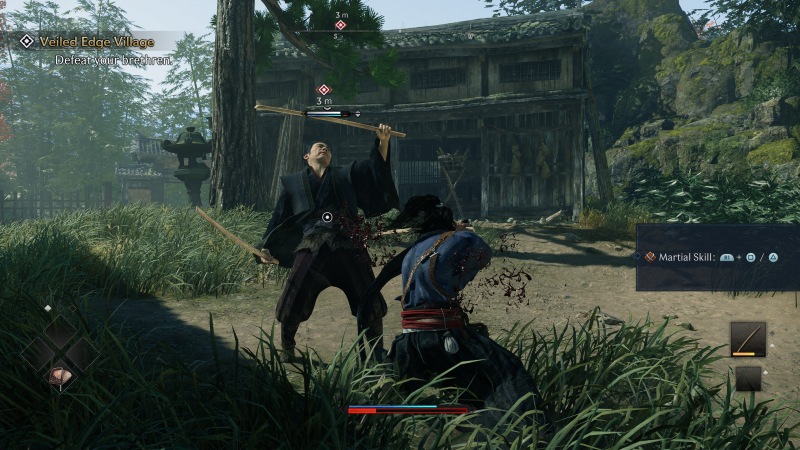
Styles counter each other in a rock-paper-scissors triangle: “Heaven” beats standard weapons but loses to light weapons; “Earth” beats heavy weapons but loses to standard; “Human” beats light weapons but loses to heavy. There is also an unarmed “None” style that ignores the system entirely. The naginata’s “Ninja” style is disadvantaged against all weapons but has strong combo chains.
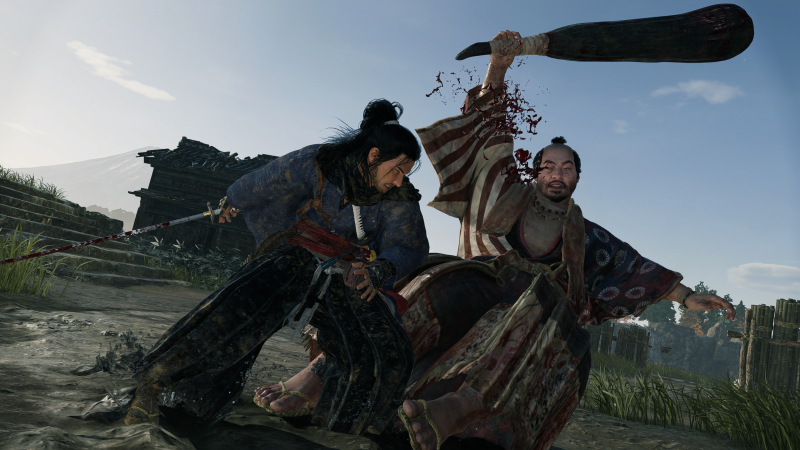
There are nine primary weapon types (katana, spear, dual blades, odachi, saber, naginata, bayonet, greatsword, and oxtail blade). You can equip two at once, choose three styles for each, and switch weapons to trigger “Violet Lightning” or switch styles for “Gale.” Comboing fills the “Flash Blade” meter; spend it after a chain to convert into stamina.
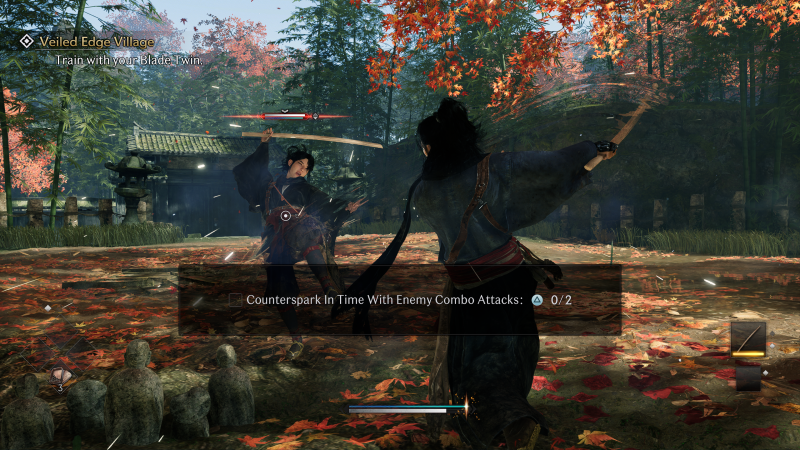
Stamina is the core resource. “Stone Spark,” the parry-like mechanic, lets you recover what you’ve spent. Each style has different parry windows, and enemies now take multiple parries to stagger, so you can’t rely on one perfect move the way you could in Wo Long.
Stealth and Party Support
Assassinations return, and the environments offer grass, rooftops, and cover. Enemy awareness is clearer, and you can reset detection by breaking line of sight. Multi-assassination skills help when you’re surrounded. The addition of AI allies also reduces the punishment for mistakes, which makes the early game feel more forgiving than Team Ninja’s older titles.
Open World: Checklist Fatigue
The combat is energetic, but the open world feels thin in the opening hours. Yokohama and its surrounding zones are broken into more than ten regions, each loaded with checklist points: cats, shrines, chests, fast-travel spots, and bandit cleanups. Most are just “arrive and press a button” or “arrive and fight.”
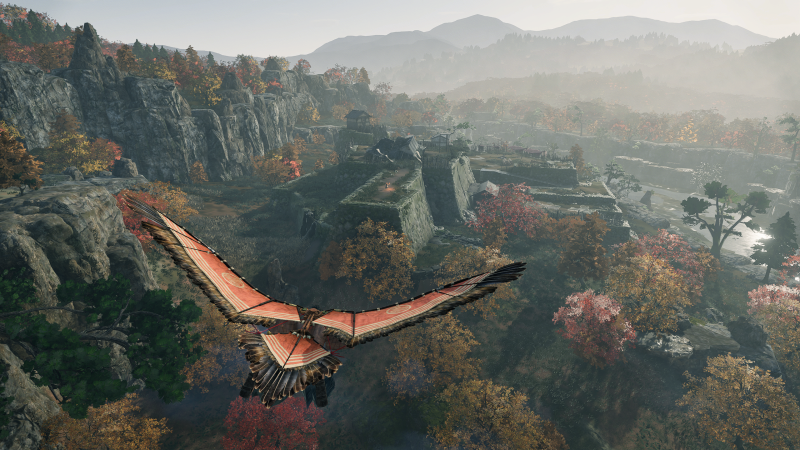
A few areas add gliding, archery, or mounted archery mini-games, but the activities are standard and the presentation doesn’t elevate them. Combat hotspots don’t have the distinct terrain design you’d expect from Nioh or Wo Long, and once you unlock the glider, you can bypass a lot of the map to drop in for stealth kills, which makes encounters feel samey.
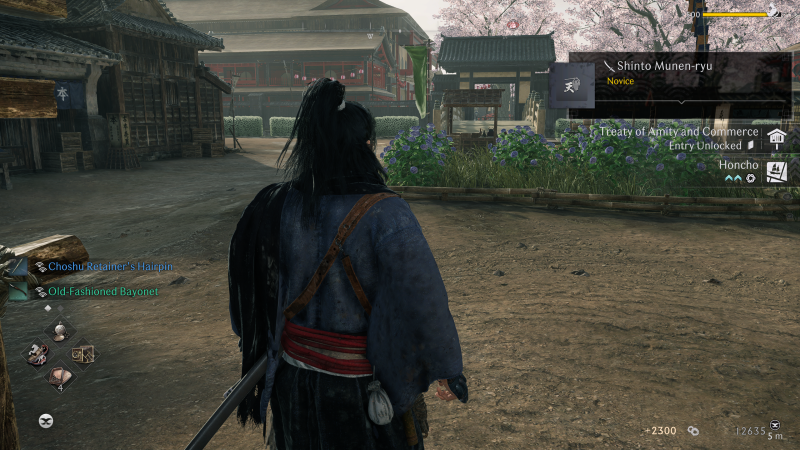
Towns also feel light on interaction. Beyond a couple of merchants and quest NPCs, the world doesn’t react much, even when you wave a weapon around. Compared with Dynasty Warriors 9, it is progress, but against other open-world formulas, it still feels sparse.
Early Takeaway
So far, Rise of the Ronin is at its best in combat, where the hybrid system feels fast and satisfying. The open world is the weaker half, with bland map design and straightforward activities that don’t invite deep exploration. These impressions are only from the first two hours, and the game may open up later, but right now the combat is doing the heavy lifting.